FIVE-STAR REVIEW FOR “A DREAM COME TRUE”
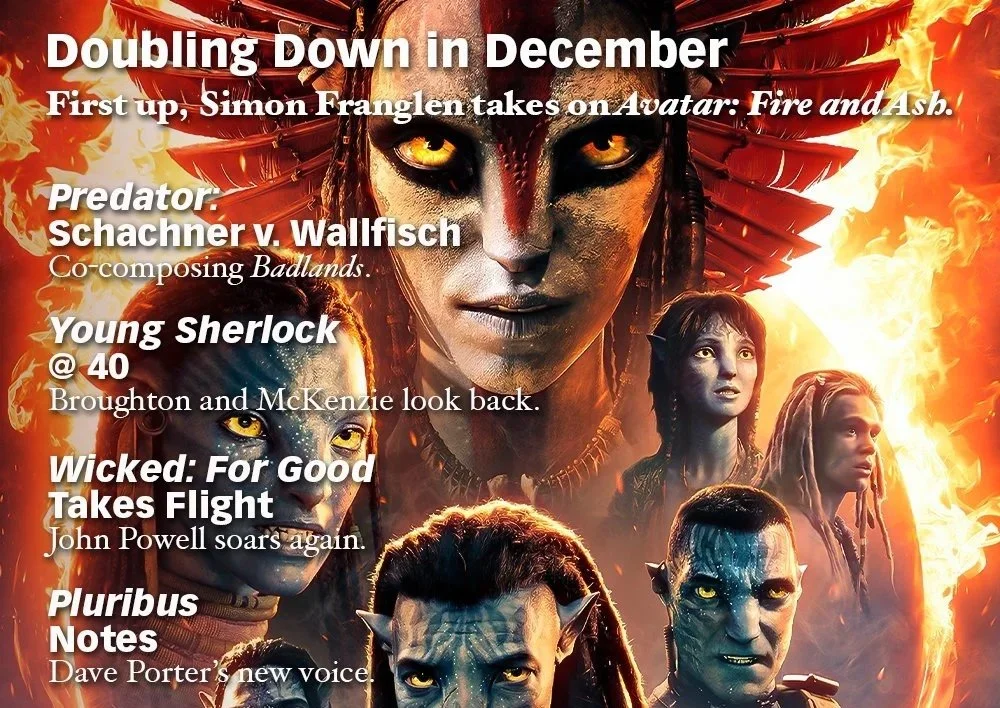
For the December issue of the film music magazine “FSM Online”, writer and composer Steven A. Kennedy has reviewed my book, “ A Dream Come True - The Collaboration of David Lynch and Angelo Badalamenti.”
I am delighted not only that the review is so positive, but also that the reviewer completely understood what I was trying to do. It's such an in-depth, spot-on analysis of my work that I am enormously grateful for it. Rarely has somebody devoted so much care to a review of a book of mine and written it with so much insight and knowledge.
The magazine is available for purchase here.
I copy the full review down here:
“Stephen [sic] Eicke’s new book exploring the collaborative creativity of David Lynch and composer Angelo Badalamenti has a well-chosen title. For [sic] a Dream Come True captures more than simply a composer finding much-needed work at an opportune moment—it also gestures toward the singular, visionary imagination of an exceptional director. Eicke’s writing offers an erudite and deeply detailed study of these two artists, bolstered by abundant musical examples that provide illuminating context rather than serving as decorative asides.
The book opens with two biographical chapters. Drawing on meticulous research and personal interviews, these sections establish a meaningful foundation for understanding the personal inspirations and motivations shaping both men’s creative instincts. This early grounding also establishes a baseline that deepens with every project Eicke examines, turning biography into critical infrastructure rather than preamble.
The second part moves through six films, with Twin Peaks naturally receiving the most extensive discussion. Each project is approached through a distinct conceptual lens, blending narrative insight with analysis of how musical ideas took shape, often in real time, through collaboration and experimentation. One of the book’s most compelling through lines is Lynch’s own sophisticated grasp of sound design and how his approach to sonic architecture influences not only atmosphere but compositional direction. Eicke highlights this particularly well when discussing “industrial-organic” textures in Eraserhead, a case study in how soundtrack DNA can inform score logic itself.
We also gain valuable perspective on Badalamenti’s workflows, which at times embrace spontaneity and serendipity, feeling almost guided by intuition and happy accident—though never without craft beneath the surface. With each film, the book draws us closer to understanding the alchemy of their evolving creative partnership, a relationship that functions like a recurring motif, subtly transformed yet thematically consistent.
The final two chapters bring the story full circle, returning to individual reflections on Lynch and Badalamenti after so many shared journeys. The book’s structure ultimately feels like an arch form, carefully shaped like a score itself: biography gives rise to collaboration; collaboration resolves into legacy; legacy returns us to identity. Eicke reinforces this symmetry not by naming it outright, but by letting it unfold musically and narratively through pacing and design.
One of the book’s smartest editorial choices is its incorporation of interview material. Eicke threads quoted commentary into the prose rather than isolating it as appendix or sidebar. These inclusions don’t interrupt—they corroborate, clarify and expand. Particularly strong are the passages where Lynch and Badalamenti comment side by side on the same musical moment, line or conceptual impulse. These mirrored reflections are uncannily immersive, creating the sensation of sitting with both men as they unpack their artistic negotiations.
The book includes a concise bibliography, along with frequent footnotes that make clear the depth of Eicke’s sourcing. A thoughtful index provides fast access to people, themes and individual film discussions, ensuring that even its scholarly mechanics feel reader-friendly rather than academic for academia’s sake.
Some familiarity with Lynch’s films enhances the book’s rewards, but the text itself provides more than enough narrative and musical scaffolding to bring newcomers along. It will almost certainly send readers back to their personal libraries, carving out time to experience the works again, now with enriched listening ears. For [sic] a Dream Come True isn’t just aptly named, as it delivers exactly what it promises: a dream of understanding made concrete, collaborative and beautifully traced.”